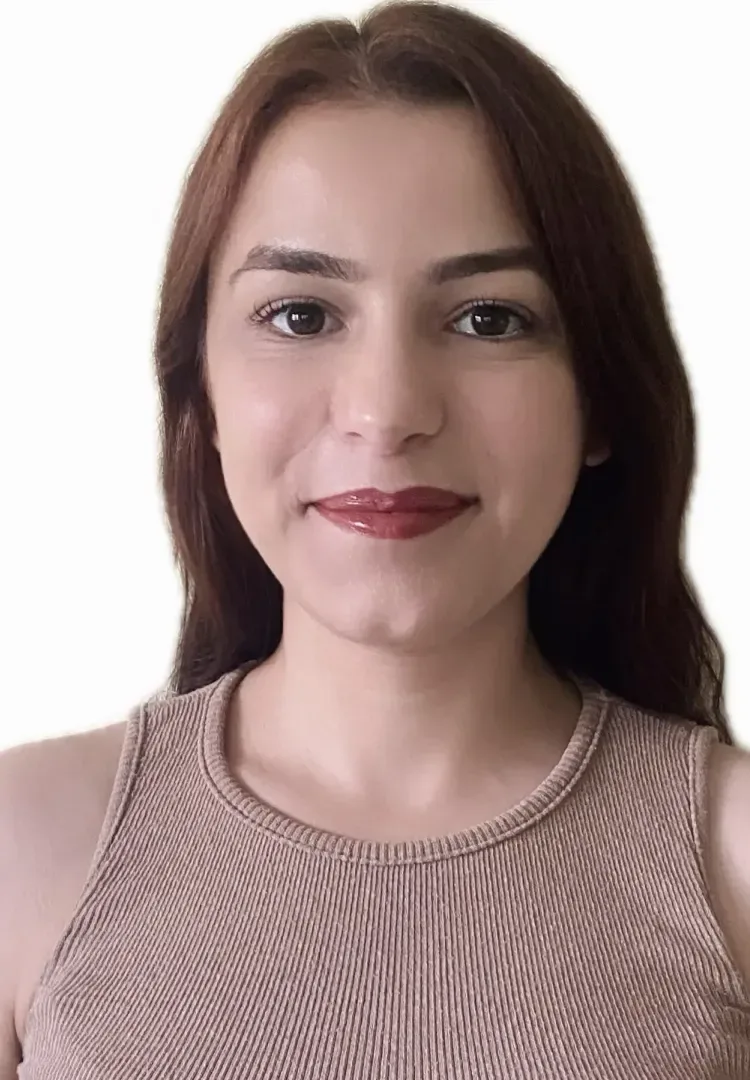
She works with adults in individual psychotherapy from a psychoanalytic and existential perspective; since 2022 she has practised as a psychotherapist in various clinics. Wherever you live in Europe, sessions are held in Turkish — you never have to translate what you want to say.
4 yearsprofessional experience
Karabüksessions online
Turkishlanguage of sessions
Payment is handled by Stripe over an encrypted connection; your card details are never stored by Terapi Avrupa.
Diplomas verified before joining Sessions in Turkish You choose the day and time Encrypted and confidential · GDPR
In brief
Who is Aslıhan Şenay?
Aslıhan Şenay is a clinical psychologist based in Karabük who has worked as a psychotherapist since 2022. She completed her bachelor’s degree in psychology at Yeditepe Üniversitesi on a full scholarship with honours, and her master’s degree in clinical psychology at Okan Üniversitesi. With adults she practises individual psychotherapy from a psychoanalytic and existential perspective. Through Terapi Avrupa she meets Turkish people living in Europe online.
In her own words
“Clinical Psychologist Aslıhan Şenay works with adults in individual psychotherapy within the psychoanalytic and existential schools. She completed her bachelor’s degree in psychology at Yeditepe Üniversitesi on a full scholarship, graduating with honours. She completed her master’s degree in clinical psychology at Okan Üniversitesi. She received basic training in existential analysis from the Varoluşçu Akademi. She has worked as a psychotherapist in various clinics since 2022. She supports the Boğaziçi Üniversitesi Student Guidance and Counselling Centre as an external volunteer therapist.”
By her own description Aslıhan Şenay practises individual psychotherapy with adults; she does not give a list of diagnoses. The topics below are the ones people most often bring to psychoanalytic and existential work. You do not need to know which of them fits you; tapping a title shows how Turkish-speaking online support works in that area.
Individual psychotherapy for adults
Sessions you can come to without a diagnosis: recurring relationship patterns, becoming a stranger to yourself, the feeling of “am I really living this life?”. Psychoanalytic work looks at where today’s impasse was formed in the past; existential work talks about choice, responsibility and meaning.
Avoiding closeness or, the other way round, the fear of being left, always ending up in the same place in relationships, the weight of a bond with family that continues from afar. Aslıhan Şenay’s master’s thesis is on young adults’ attachment styles and life satisfaction; this topic sits at the centre of her sessions.
Being constantly on alert, not being able to fall asleep, tightness in the chest, the sense that something is about to happen. Sessions look not only at when the anxiety rises but at what it covers; living alone abroad often makes the picture heavier.
No drive, not being able to get up in the morning, nothing tasting of anything, feeling worthless. Sessions look at when this state began, what keeps it going and which small part of the day is possible again.
Losing someone from far away, missing the funeral, not being able to say goodbye. For many people living in Europe, grief therefore also carries something unfinished. Existential work focuses on which question about life the loss has opened — and on making it something that can be talked about.
Feeling inadequate, not being able to say no, constantly seeking approval, getting lost in other people’s expectations. Sessions look together at where this pattern was learned and in which relationships it continues today.
Aslıhan Şenay describes her work through two schools. Which one you go with is decided together in the first sessions; the choice depends on your question, your history and what you are comfortable with.
Psychoanalytic psychotherapy
An approach that looks at where today’s impasse was formed in the past and talks about relationship patterns and unnoticed repetitions. It aims less at removing the symptom quickly than at understanding the structure that produces it; the sessions are therefore usually longer-term and regular.
Existential psychotherapy
An approach that works with questions of meaning before symptom lists: responsibility, choice, loneliness and the feeling of “am I really living this life?”. A frame often turned to after breaking points such as migration, a change of work or a loss.
These two headings rest on Aslıhan Şenay’s own account; the corresponding training (basic training in existential analysis and supervision in the psychoanalytic approach) is listed among the credentials below.
Credentials
Training and certificates
The list below is compiled from the training Aslıhan Şenay states in her Terapi Avrupa profile. University degrees and later training are deliberately kept apart: they are not the same thing, and it makes a difference when you assess a professional. The graduation years are not yet recorded, so the date field is left empty.
University degrees2
—Clinical Psychology (Master)Okan Üniversitesi
—Psychology (Bachelor, full scholarship, with honours)Yeditepe Üniversitesi
Training and certificates2
—Basic Training in Existential AnalysisVaroluşçu Akademi
—Individual Supervision in the Psychoanalytic Approach (continuing training)
The diplomas of every psychologist working with Terapi Avrupa are checked one by one before they join.
How it works
How do you get a session with Aslıhan Şenay?
Four steps. The first two are free, and card details are never asked for at any stage.
1
Open your free account
With your email address, in a few seconds. Opening an account is free and commits you to nothing.
2
Write to Aslıhan Şenay for free
You describe what is going on in your own words. After reading her reply you decide whether to continue.
3
Book your session
When you feel ready you choose the day and time yourself — evenings and weekends included. You pay only for the session you book.
4
Meet by video
At the appointed time you click the link you were sent. The session lasts 50 minutes; you do not need to install any software.
Free first message
Write your free message to Aslıhan Şenay here
Before you can send your message you need to open a free account — that is exactly what the form below is for. It takes a few seconds, no card details are asked for, and it commits you to nothing. Once your account is ready, you write your first message for free.
1You fill in the form and open your free account — no card details
2You write your first message to Aslıhan Şenay in your own words, free of charge
3You read her reply; you decide about a session and anything further afterwards
Writing does not commit you to a session. If it does not feel right, you can switch to another psychologist or leave it there.
You do not need to be ready to talk — ready to write is enough
Write Aslıhan Şenay a free message and describe what is going on in your own words. You decide about a session, the fee and anything further afterwards.
Free and without obligation — no card details
Sessions in Turkish, 50 minutes, from your own home
If it does not feel right, you can switch to another psychologist
If you are in an emergency or have thoughts of harming yourself or someone else, please call the emergency number in the country you are in (across Europe: 112).
Last updated: 15 September 2026 · The information on this page comes from the profile and documents Aslıhan Şenay provided herself.