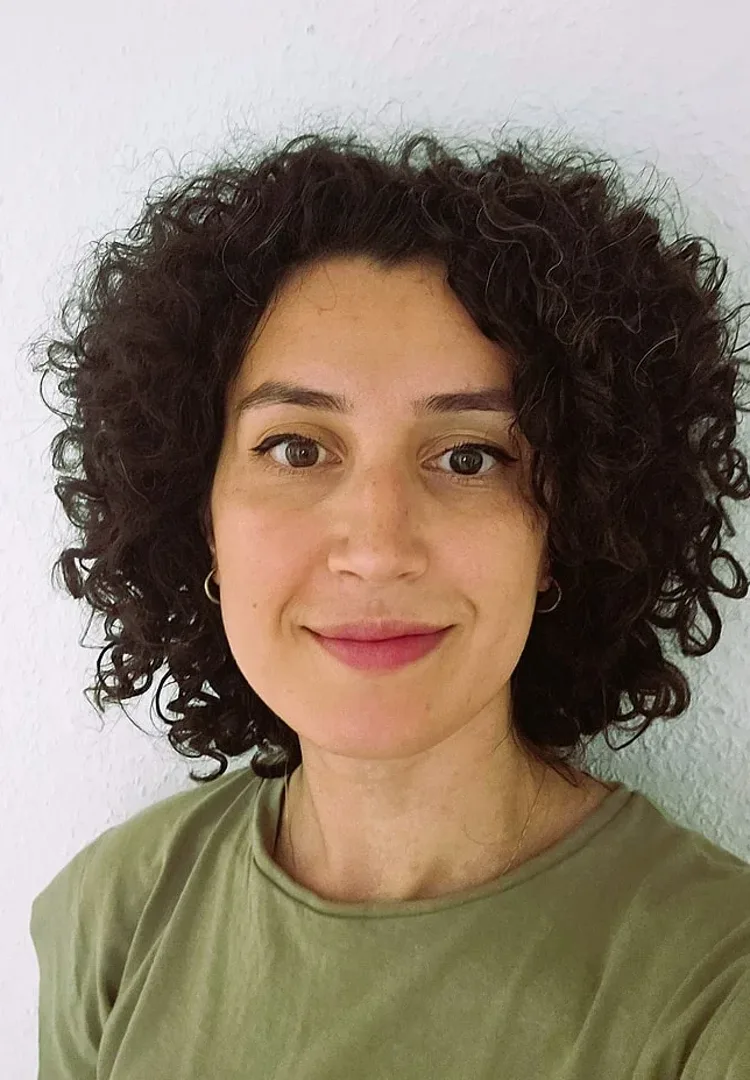
She lives in Germany herself: you do not have to explain what migration brings with it, how settling in goes or what it is like to stand between two countries. She works in Turkish on anxiety, depression, grief, anger and questions of parenting.
12 yearsprofessional experience
Ravensburglives in Germany
80 €50-minute session
Turkishlanguage of sessions
Payment is handled by Stripe over an encrypted connection; your card details are never stored by Terapi Avrupa.
Diplomas verified one by one Sessions in Turkish You choose the day and time Encrypted and confidential · GDPR
In brief
Who is Damla Yanıkkol İşler?
Damla Yanıkkol İşler is a clinical psychologist who lives in Ravensburg in Germany and has practised for twelve years. She graduated top of her year in psychology from Ankara Üniversitesi in 2012 and completed her master’s in clinical psychology at the same university in 2018. She holds online sessions in Turkish on migration and settling in, anxiety, depression, loss and grief, and parenting.
In her own words
“I have been living in Germany for some time and offer online counselling in areas such as migration-related difficulties, problems of adjustment, anxiety, depression, loss and grief, stress, anger control, boundary and communication problems within the family, childbirth (difficulties before birth and in the postnatal period) and relationship problems. I also work with parents on the difficulties of parenting and develop solutions together with them.”
What can you talk about with Damla Yanıkkol İşler?
The areas below are the ones Damla Yanıkkol İşler states herself. You do not need to know which of them fits you; tapping a title shows how Turkish-speaking online support works in that area.
Migration and settling in
Starting from scratch in a new country, language, residence and work matters, what was left behind and the feeling of belonging “neither here nor there”. Damla Yanıkkol İşler has been living in Germany herself for some time; these one-to-one sessions do not begin with you explaining that.
Being constantly on alert, not being able to fall asleep, tightness in the chest, the sense that something is about to happen. Sessions look at the situations in which the anxiety rises and how it shows up in the body; living alone abroad often makes the picture heavier.
No drive, not being able to get up in the morning, nothing tasting of anything, feeling worthless. Sessions look at when this state began, what keeps it going and which small part of the day is possible again.
Losing someone while far away, missing the funeral, not being able to say goodbye. For many people in Europe grief therefore also carries something unfinished. Sessions work on how that gap can become something you are able to speak about.
Work, shift patterns, residence and language matters, family far away — for many people in Europe the load is not one thing but several at once. These sessions work on ways to reduce the load and on habits that protect your capacity to carry it.
Arguments that grow faster than expected, the regret that stays afterwards, guilt towards the children or towards a partner. Sessions look step by step at the point where the anger surges and at what happens immediately before it.
Conflict between generations, expectations a family keeps sending from far away, the question of who draws a line where. Sessions can be held alone or with the family members concerned.
The everyday questions of raising a child between two languages and two cultures, together with difficulties before birth and in the postnatal period. Sessions are held with the parents; the child does not have to go into therapy.
Damla Yanıkkol İşler says that rather than staying with a single school she chooses the method that suits the person and the topic. The table shows which method she uses for what, and when and where she trained in it.
Method
Usually used for
Training
Schema therapy
Recurring relationship patterns, early schemas
2025 · ISST-approved, Prof. Dr. Gonca Soygüt Pekak
Cognitive behavioural therapy (CBT)
Anxiety, depression, stress and anger
2015 · DABATEM
Family and marital therapy
Relationship problems, boundaries and communication in the family
2014 · ODTÜ Sürekli Eğitim Merkezi
Filial therapy
Strengthening the parent–child relationship through play
2021 · Balat Psikoloji
Child assessment tests
When a detailed picture of a child’s development is needed
2019 · Türk Psikologlar Derneği
Pre-marital and family education programmes
Moving in together, preparing for parenthood
2018–2019 · Aile ve Sosyal Politikalar Bakanlığı
Which method is used is decided together in the first sessions. The choice depends on the question, on your history and on what you are comfortable with; no method is the best one for every topic and every person.
Credentials
Education and certificates
The list below is compiled from the documents Damla Yanıkkol İşler submitted to Terapi Avrupa. University degrees and later training courses are deliberately kept apart: they are not the same thing, and the difference matters when you are assessing a professional.
University degrees3
2018Clinical Psychology (Master’s)Ankara Üniversitesi
2012Psychology (Bachelor’s)Ankara Üniversitesi
2012Top of the Psychology DepartmentAnkara Üniversitesi, Dil ve Tarih-Coğrafya Fakültesi
Training and certificates7
2025ISST-Approved Schema Therapy Foundation TrainingProf. Dr. Gonca Soygüt Pekak
2019Child Assessment PackageTürk Psikologlar Derneği
2019Train-the-Trainer, Family Education ProgrammeAile ve Sosyal Politikalar Bakanlığı
2018Trainer, Pre-Marital Education ProgrammeAile ve Sosyal Politikalar Bakanlığı
2015Clinical Applications of Cognitive and Behavioural TherapiesDABATEM
2014Family and Marital Therapy (Modules 1 and 2)ODTÜ Sürekli Eğitim Merkezi
The diplomas of every psychologist working with Terapi Avrupa are checked one by one before they join.
How it works
How do you get a session with Damla Yanıkkol İşler?
Four steps. The first two are free, and card details are never asked for at any stage.
1
Open your free account
With your email address, in a few seconds. Opening an account is free and commits you to nothing.
2
Write to Damla Yanıkkol İşler for free
You describe what is going on in your own words. After reading her reply you decide whether to continue.
3
Book your session
When you feel ready you choose the day and time yourself — evenings and weekends included. You pay only for the session you book.
4
Meet by video
At the appointed time you click the link you were sent. The session lasts 50 minutes; you do not need to install any software.
Transparency
A session with Damla Yanıkkol İşler costs 80 €
Sessions last 50 minutes. You can book a single session or choose a package covering several; the current price for both is shown in the booking window above. There is no membership fee — you pay only for the session or package you choose. You can cancel or reschedule free of charge up to 24 hours in advance. Your first message is free in any case.
Terapi Avrupa is a private counselling service; the fees are not covered by health insurance.
Write your free message to Damla Yanıkkol İşler here
Before you can send your message you need to open a free account — that is exactly what the form below is for. It takes a few seconds, no card details are asked for, and it commits you to nothing. Once your account is ready, you write your first message for free.
1You fill in the form and open your free account — no card details
2You write your first message to Damla Yanıkkol İşler in your own words, free of charge
3You read her reply; you decide about a session and anything further afterwards
Writing does not commit you to a session. If it does not feel right, you can switch to another psychologist or leave it there.
You do not have to be ready to talk — ready to write is enough
Write Damla Yanıkkol İşler a free message and describe in your own words what is going on. You decide about the session, the fee and everything else afterwards.
Free and without obligation — no card details
Sessions in Turkish, 50 minutes, from your own home
She lives in Germany herself — you do not have to explain the path of migration
If you are in an emergency or have thoughts of harming yourself or someone else, please call the emergency number in the country you are in (across Europe: 112).
Last updated: 28 August 2026 · The information on this page comes from the profile and documents Damla Yanıkkol İşler provided herself.